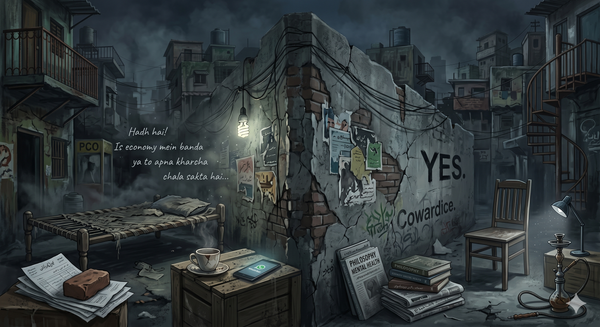
We Don't Even Need Superman. We Just Need One Brave Man.
Orwell said telling the truth is a revolutionary act. The animated Superman — not the comics, not the films, the cartoon — said the world doesn't need a superman. Just a brave man.
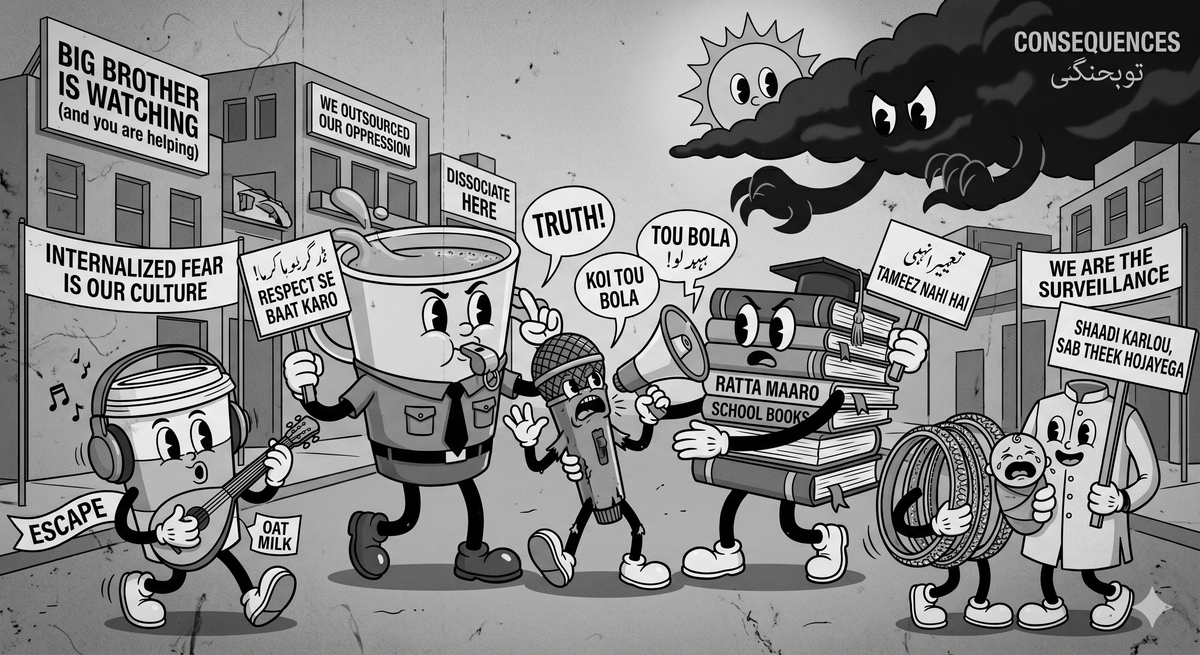
If someone speaks up — finally, koi tou bola — and what do we do? We don't hear what they said. We hear how. Tone police laga dete hain immediately. "Respect se baat karo." "Ye tameez nahi hai." As if the building isn't on fire because someone raised their voice about the fire. As if the truth becomes less true when it's delivered with frustration. As if Orwell's revolutionary act only counts when it's performed politely, with a cup of chai and a smile, so that Big Brother isn't offended.
"In a time of deceit, telling the truth is a revolutionary act." — Venturino Venturini [Partners in Ecocide] (Famously misquoted to Orwell)
But here's what I've stopped blaming on culture alone... This isn't just bad manners. This is a psychological crisis that nobody will name because naming it would require the very courage we're talking about.
The fear is internalized. That's the word. Big Brother — the ... , the establishment, the uncle who knows people, the system that can make your life very quietly difficult — Big Brother has been watching for so long that we've started watching each other on his behalf. We've become the surveillance. We've outsourced our own oppression and called it culture.
And the mind... the mind cannot hold that kind of thing without fracturing somewhere.
So what do we do? We dissociate. Not clinically, not in the textbook sense — but functionally. We find the nearest exit from the pressure and we walk through it and we never look back and we call it moving on.
The education system is the first exit. RATTA MAARO. MARKS LAO. DOCTOR BAN JAO. Don't think, absorb. Don't question the syllabus, memorize it. The system is not accidentally broken — a thinking population is an inconvenient population. So we train the curiosity out of children early and reward compliance with grades and call it meritocracy. The child who asks why too many times gets told to focus. Focus on what? On not asking why. And that child grows up... slightly hollowed. Slightly afraid of their own questions. That is not education. That is pre-emptive silencing.
Then comes the café phase. The aesthetic of escape. Karachi, Lahore — you see it everywhere now. Overpriced coffee, ambient playlists, people on laptops performing productivity or peace. And I'm not mocking it, wallah I'm not, because I've been that person. But there's something worth sitting with here — why does an entire generation need to buy an atmosphere of calm? What are we running from inside our own homes, our own heads, that we need a third place with Edison bulbs and oat milk to just... breathe? The café is not a community. It's a pressure valve. And we are grateful for it because the alternative is sitting alone with a mind that's been taught to surveil itself.
"The world doesn't need a Superman. Just a brave man." — Superman: The Animated Series
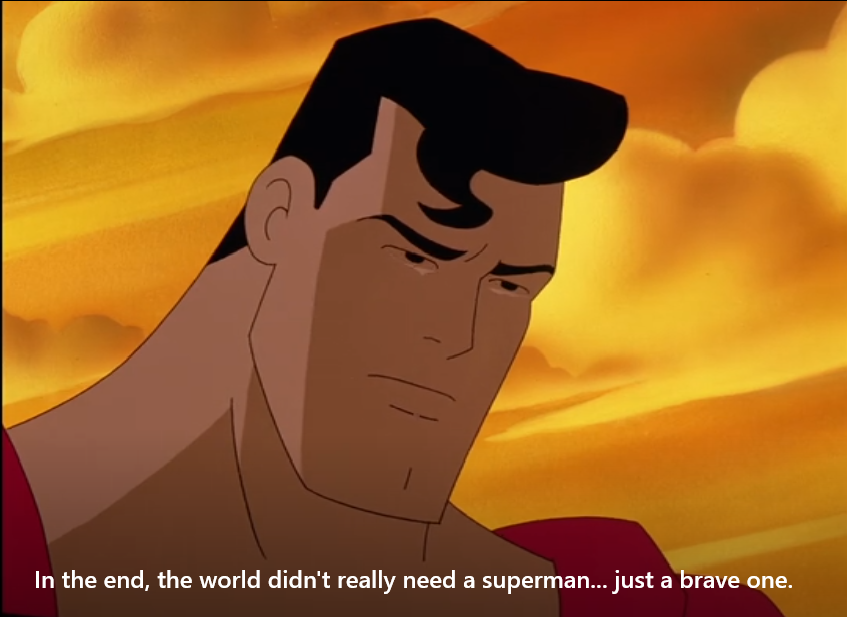
Watch at [https://www.b98.tv/video/apokolips-now-part-2/ - 20:00]
And then — and this one is the one nobody says out loud — there is marriage. There is giving birth. Not always for love, not always for readiness, but sometimes, often, for distraction. For legitimacy. For the social contract that says: now you have a reason, now you have a role, now you are too busy surviving to ask the questions that were making everyone uncomfortable. Shaadi karlou, sab theek hojayega. Give him a child, she'll calm down. As if a new life is a prescription. As if another human being is a solution to the one inside your chest that you haven't dealt with.
These aren't choices made in freedom. These are choices made in quiet desperation by people who were never given the psychological tools to sit with uncertainty, with dissatisfaction, with the terrifying open-endedness of I don't know what I want yet. Because sitting with that requires a kind of bravery. And bravery — we've already established — is not something we cultivate here.
The mental health crisis in Pakistan is real and it is layered and it is almost never discussed in full because discussing it fully would require pointing at systems. At schools. At Big Brother. At the very structures that benefit from a population that is exhausted and dissociated and asking no sharp questions. It's easier to tell someone to do zikr and sleep early. And maybe that helps. But it doesn't address the thing underneath — the internalized Tone Police, the self-censoring, the slow grief of a people who stopped expecting to be heard and started optimizing for survival instead.
We don't need a Superman. We established that. But the brave man the cartoon was talking about? He requires a society that doesn't immediately scrutinize his tone and miss his entire point. He requires a culture that has learned — even slightly — to separate the message from the messenger. To hear the truth even when it arrives uncomfortable, unpolished, real.
We are a people sitting on so much that needs to be said... and we keep offering each other better ways to not say it.
Spoiler: At the end of the bravery of the normal man - Darkside says "Bravery has its consequences..." and ends the life of the brave man. That is also another uncomfortable truth we all know and carry. The act of bravery, comes usually accompanied with the act of death, metaphorically and literally. The most beautiful irony of the "Islamic Republic" is, that we all have "tawakkul" in Allah and his promise of death, yet we are the only nation and generation on earth that is afraid of it, and will use it as a justification to not do what is required.